Mirrored Sunglasses and Lens Coatings Explained
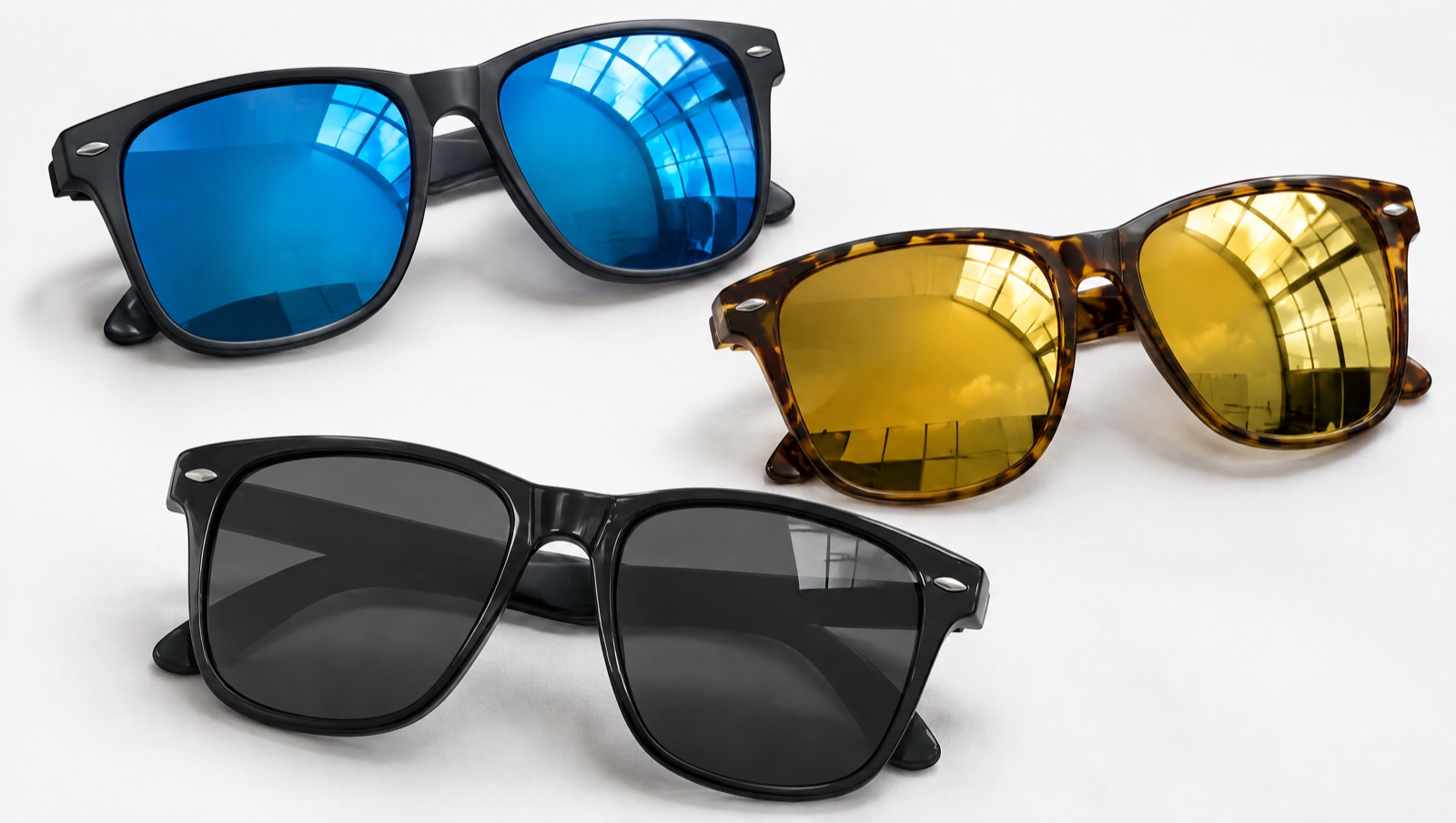
Mirrored Sunglasses: What the Mirror Coating Does
A reflective layer on the front of the lens that bounces away extra light. It lowers the amount of light reaching your eyes, hides your eyes from view and comes in colours like blue, gold and silver. Useful for very bright days on water, sand or snow. Downside: mirror coatings scratch more visibly than plain lenses.
Coatings vs Lens Features
A coating is a thin layer applied to the lens surface. It is different from the lens tint, the lens category, polarisation or photochromic technology, which are built into the lens itself. Coatings fine-tune how the lens handles light, water and wear.
Anti-Reflective (AR) Coating
Applied to the back of the lens, AR stops light from behind you bouncing off the inside of the lens into your eye. You notice it most when the sun is low behind you, such as evening runs or west-facing drives. It is one of the most underrated upgrades in sunglasses.
Hydrophobic and Oleophobic Coatings
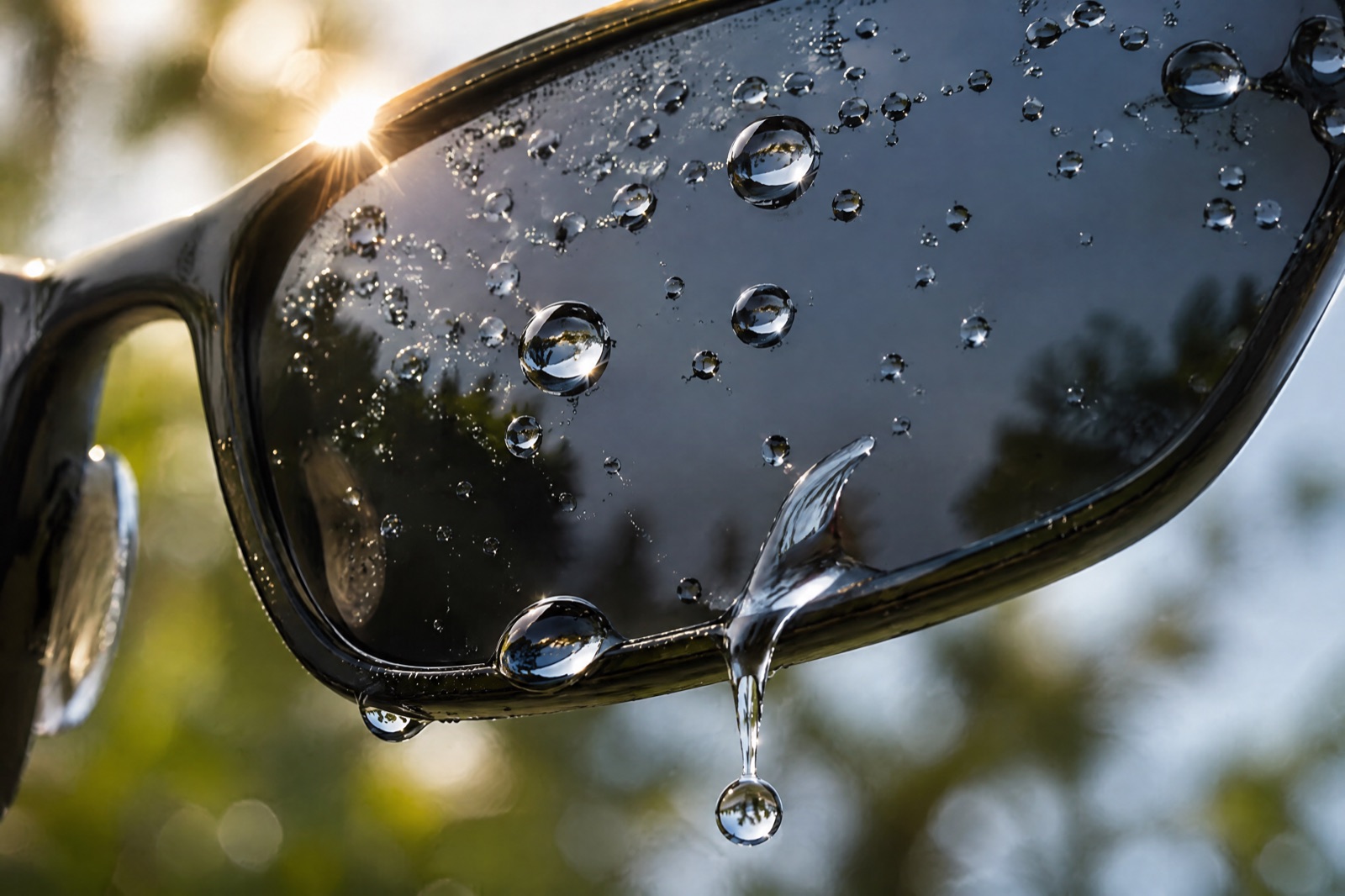
Hydrophobic coatings make water bead and roll off. Oleophobic coatings resist oil from skin, sunscreen and fingerprints. Together they are ideal for Singapore's sudden showers, heavy sweat and sunscreen-smeared fingers. They also make lenses easier to clean. See our cleaning guide to keep them working.
Scratch-Resistant Hard Coat
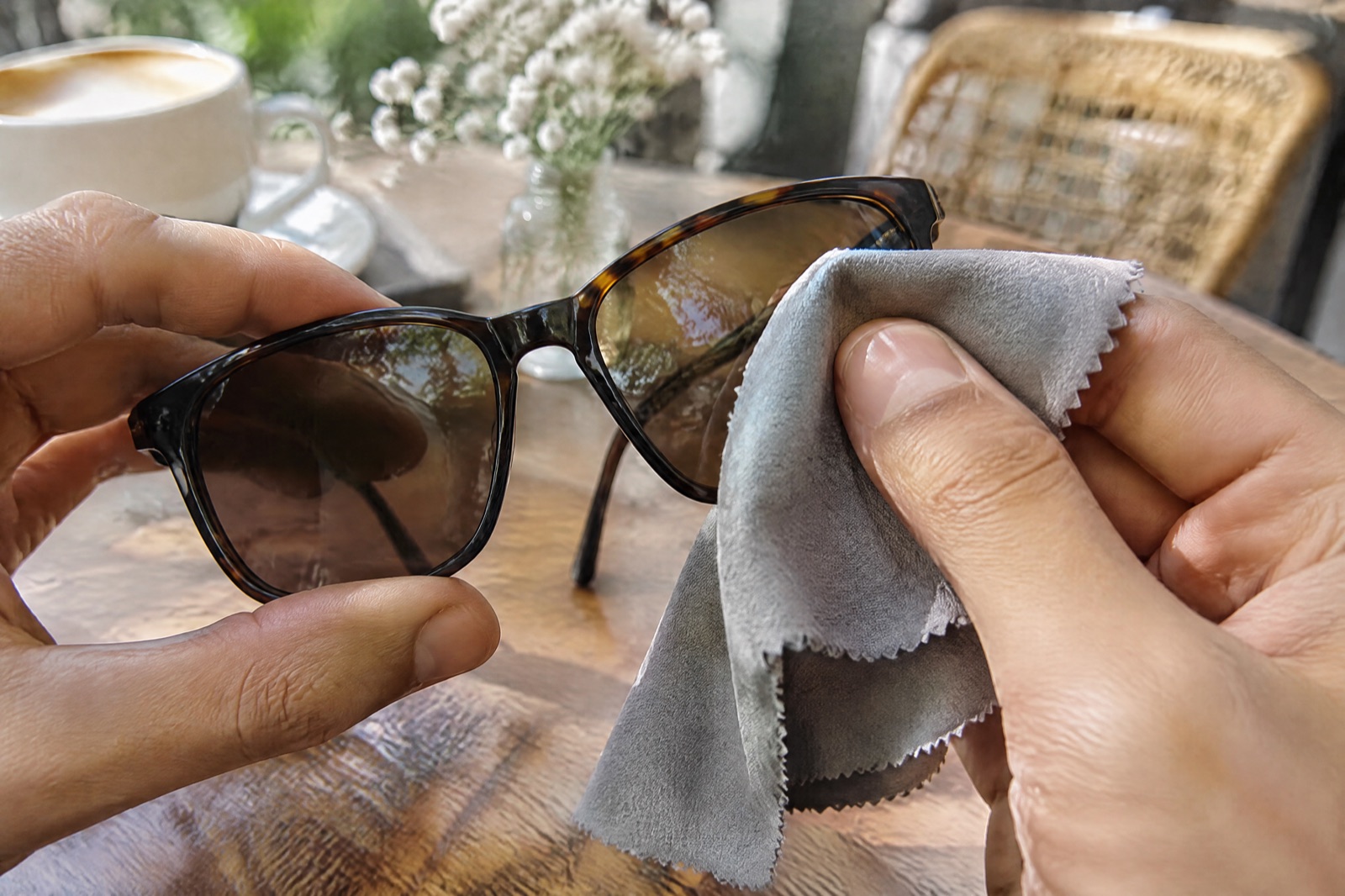
Polycarbonate lenses are tough but scratch easily on their own, so most quality lenses have a hard coat. It will not make lenses scratch-proof, but it slows down the haze that builds up from wiping and dropping. If you throw your sunglasses in a bag without a case, this coating earns its keep.
Anti-Fog Coating
An inside coating that spreads moisture into a thin, clear film instead of droplets. Essential for running, cycling, hiking and racquet sports in humid weather. Anti-fog coatings wear down over time, especially if you scrub them with rough cloths, so treat the inside of the lens gently.
Which Coatings Are Worth Paying For?
| Use | Prioritise |
|---|---|
| Everyday city wear | Back-side AR, scratch-resistant |
| Running and cycling | Anti-fog, hydrophobic, back-side AR |
| Beach and water | Mirror, hydrophobic, oleophobic |
| Driving | Back-side AR, scratch-resistant |
Frequently Asked Questions
Do coatings wear off?
Yes, slowly. Abrasive cleaning, heat and chemicals like alcohol wipes speed it up. Use a microfibre cloth and plain water or lens cleaner.
Can coatings be added later?
Rarely for sunglasses. Coatings are applied in the lab when the lens is made, so it is better to choose the right lens from the start.
Is a mirror coating the same as polarisation?
No. A mirror coating reflects light off the front surface. Polarisation filters out horizontally reflected glare. A lens can have both, either or neither.