Triathlon Sunglasses Guide
Disclosure: Sunglasses SG and Aura Shades share the same owner. We only mention Aura where it is genuinely relevant, alongside other brands.
Sunglasses Across the Three Legs
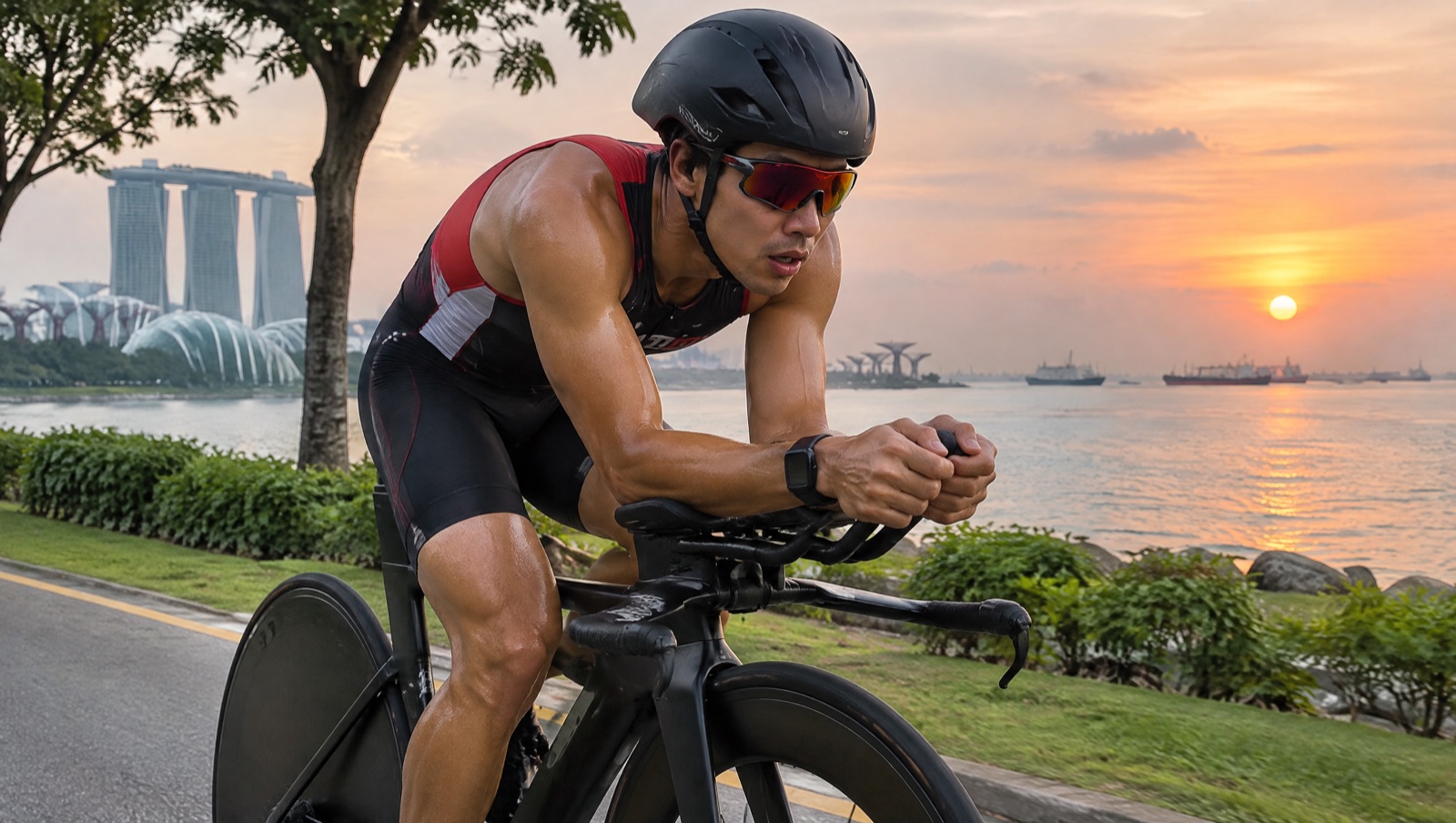
You will not wear sunglasses in the swim, so they start working in T1. From there they handle wind, grit and glare at speed on the bike, then sweat and harsh sun on the run. The pair you choose has to cope with all of it without a second thought.
Built for Fast Transitions
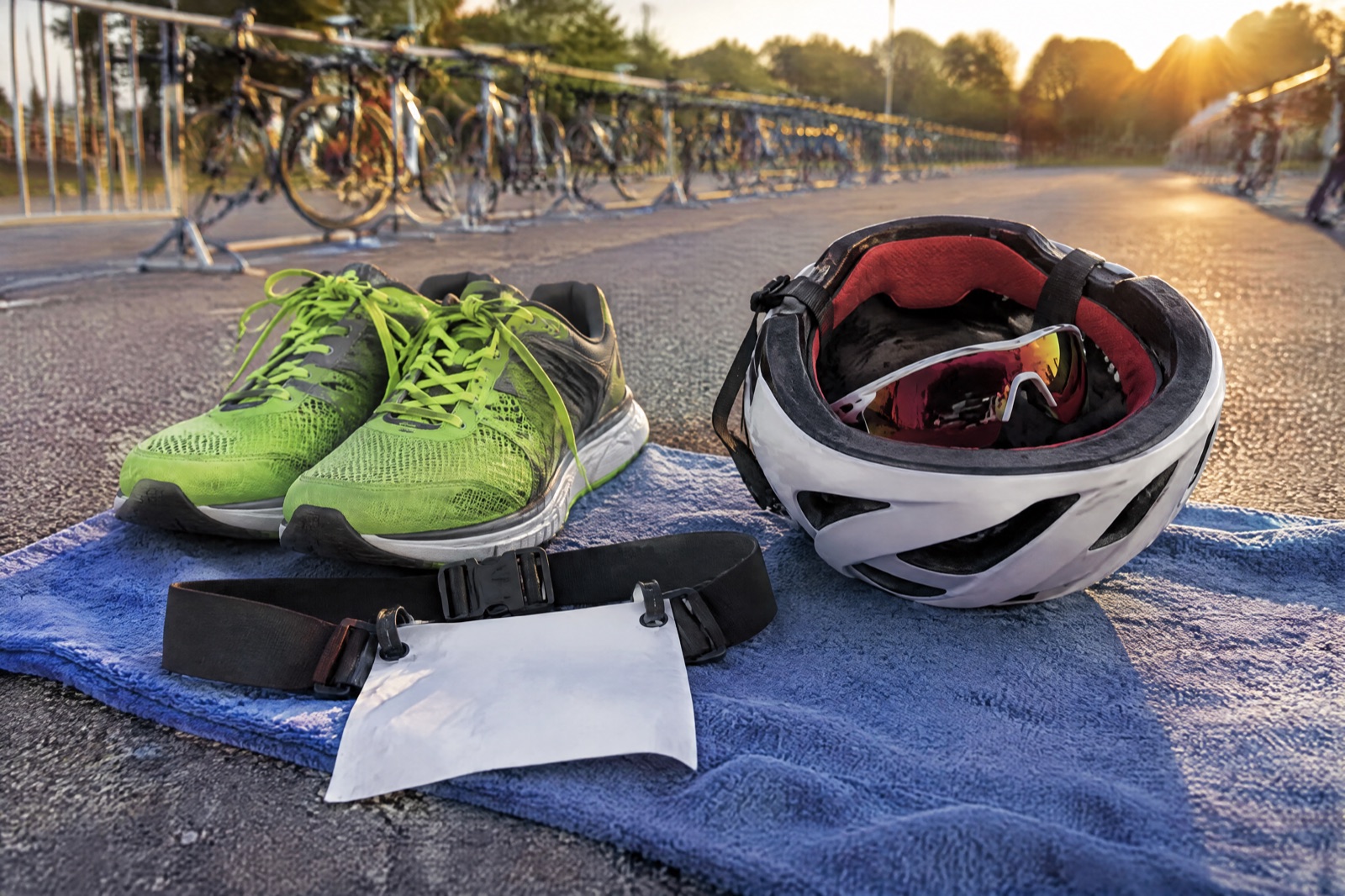
The classic move is to leave your sunglasses open and upside down inside your helmet, arms facing out. Grab the helmet, put the sunglasses on, clip in and go. For that to work you need:
- Arms that slide on easily over a wet head and under helmet straps
- A frame that does not need two hands or adjusting
- Lenses that wipe clean quickly if they pick up water
Anti-Fog and Venting
Singapore race mornings are humid, and you come out of the water hot. Fogging in the first kilometres of the bike is common. Look for lens vents, a frame that sits slightly off the face, and an anti-fog coating on the inside of the lens. Our lens coatings guide explains which coatings genuinely help.
Weight and Grip on the Run
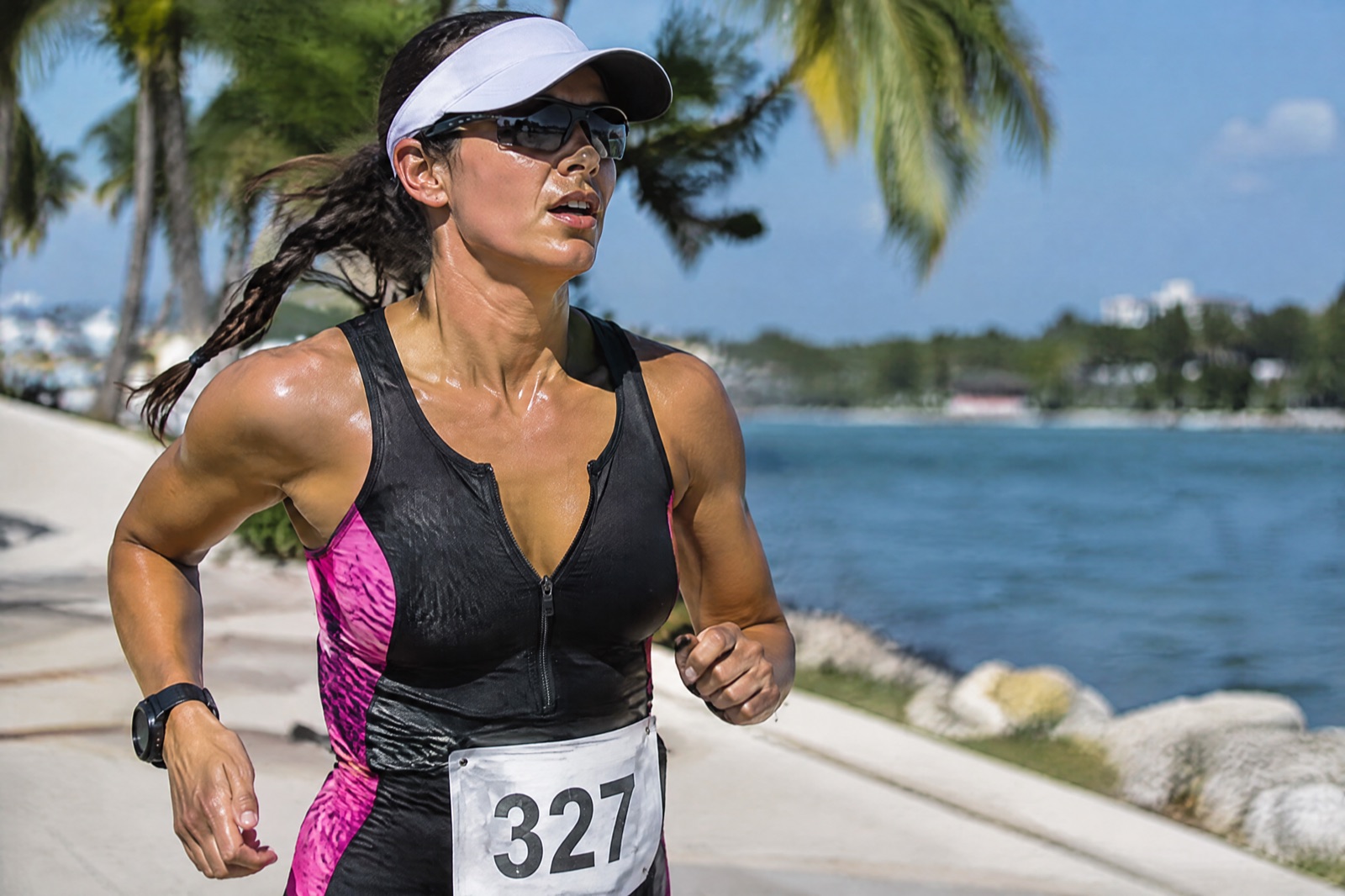
By the run, every gram on your face is noticeable. Aim for under 30g. Rubber nose pads and temple tips matter more here than anywhere, because you will be pouring water over your head at aid stations. If your current pair bounces, try the fixes in how to stop sunglasses slipping.
Lens Choice for Singapore Race Days
Most local triathlons start early, so the light changes fast: grey and soft at dawn, harsh and overhead by the run. Options:
- Photochromic: the most versatile, darkening as the sun climbs. See our photochromic guide.
- Category 2 rose or amber: good contrast on early bike legs.
- Category 3 grey or brown: best for late-morning runs in full sun.
Whichever you choose, it must be UV400. Long exposure on open coastal roads like East Coast Park adds up quickly.
Training vs Race Day
Many triathletes keep one tougher pair for training and a lighter favourite for racing. Always test race sunglasses in at least one brick session before race day, with your actual helmet. Nothing new on race day applies to eyewear too.
For frames built for running and long efforts in Singapore heat, Aura Shades' running and trail range is one local option worth a look, alongside triathlon staples from Oakley, Rudy Project and Roka (see our Roka brand guide).
Frequently Asked Questions
Should I wear sunglasses in the swim leg?
No. Use tinted or mirrored swim goggles for open water and switch to sunglasses in T1.
Do sunglasses fit under an aero helmet with a visor?
Some do and some do not. Many triathletes skip sunglasses on the bike if their helmet has a visor, then put them on in T2. Test the combination in training.
Are polarised lenses good for triathlon?
They help with glare off wet roads and water. Some cyclists find they make reading road surface texture harder, so try them on a training ride first.